I was invited to speak on political risk in mining at the 2025 PDAC Conference this week. I shared the stage with some exceptionally brilliant folks (photo below, from L to R) Daniel Linsker France Tenaille, (myself) Eric Miller and Ian MacDonald. Much thanks to the team at Gowling WLG and Control Risks for the invitation to speak.
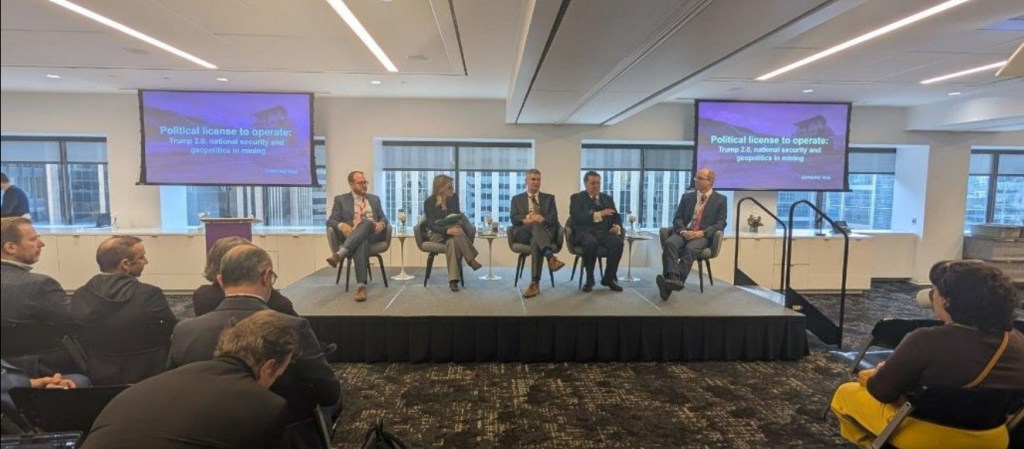
I’ve spoken at the Prospectors & Developers Association of Canada (PDAC) International Convention since 2012 on the complex risks facing exploration and mining companies. This year, the intensification of those risks has escalated to unprecedented levels. Together, with the geo-political volatility of 2024 and 74 national elections worldwide, ongoing conflict and market instability). Looking ahead, 2025 is already failing to inspire optimism for change.
Mining however, has a unique opportunity to lead. At no point in recent memory has mining played such a vital role in the political narrative. The race for economic stability and political sovereignty will run through countries with an abundance of natural resources, specifically critical minerals.
Countries are moving aggressively, aligning their domestic and foreign policy to ensure prosperity and mining is positioned to play a prominent role. China has long woven its way, quietly throughout the world’s mineral rich countryside securing those vital deposits, while others created robust regulatory frameworks that have done little to produce mineral output.
Exploration spending has declined to half of what it was in 2012 leaving dwindling reserves. A decade of underinvestment has created a massive void in the global supply chain: a vulnerability that China, Russia and others are keen to exploit. Countries that are prioritizing exploration investment, reducing permitting timelines and acerbating projects will continue to see their economies flourish ahed of those who don’t.

As a result, attracting capital to help finance exploration projects can be challenging, whether the exploration agent is a prospector, mineral exploration company or the exploration division of a mining company. Once a discovery has been made, additional resources are required to help develop a deposit and move into production.However, it is essential to understand that mineral exploration begins and ends with financing.
Below, are some of the the key factors miner’s should consider as they prepare for a volatile year in the markets, with government and stakeholders alike.
A Few Key Takeaways:
– The enduring economic, trade, and supply chain consequences of the Trump administration will continue to shape the mining sector, casting a long shadow over both short-term prospects and long-term strategic direction.
– Exogenous pressures ranging from geopolitical instability to environmental concerns—are increasingly inflating costs for exploration and mining. As political volatility intensifies, so too will the sector’s vulnerabilities, threatening to undermine its economic foundations.
– Governments are decisively shifting away from traditional, transactional relationships with mining companies, demanding more complex, multifaceted engagements that encompass broader socio-political and environmental considerations.
– For exploration and mining companies, adapting to this evolving landscape requires forging deeper, more resilient relationships with a range of stakeholders, from local communities to international investors.
– The public policy environment is in constant flux. Staying attuned to these rapidly shifting regulatory dynamics is not just advisable—it is essential for navigating the complexities of the years ahead.
– The sector can no longer afford to rely on governments to provide answers to the increasingly complex issues it faces. A proactive, self-sustaining approach to addressing challenges is now imperative.
– A decade of declining exploration has left a significant gap in global reserves, forcing nations to scramble in search of new investment to secure their mining futures.
 Help, is on the way
Leave a comment