Rising Risks of Social Unrest in the United States
The United States, once a beacon of stability and democracy, is grappling with a growing wave of social unrest. From the streets of major cities to the rural heartland, discontent is simmering, fueled by a complex interplay of economic, political,and social factors. This unrest poses significant risks to businesses, investors, and the nation’s overall stability.
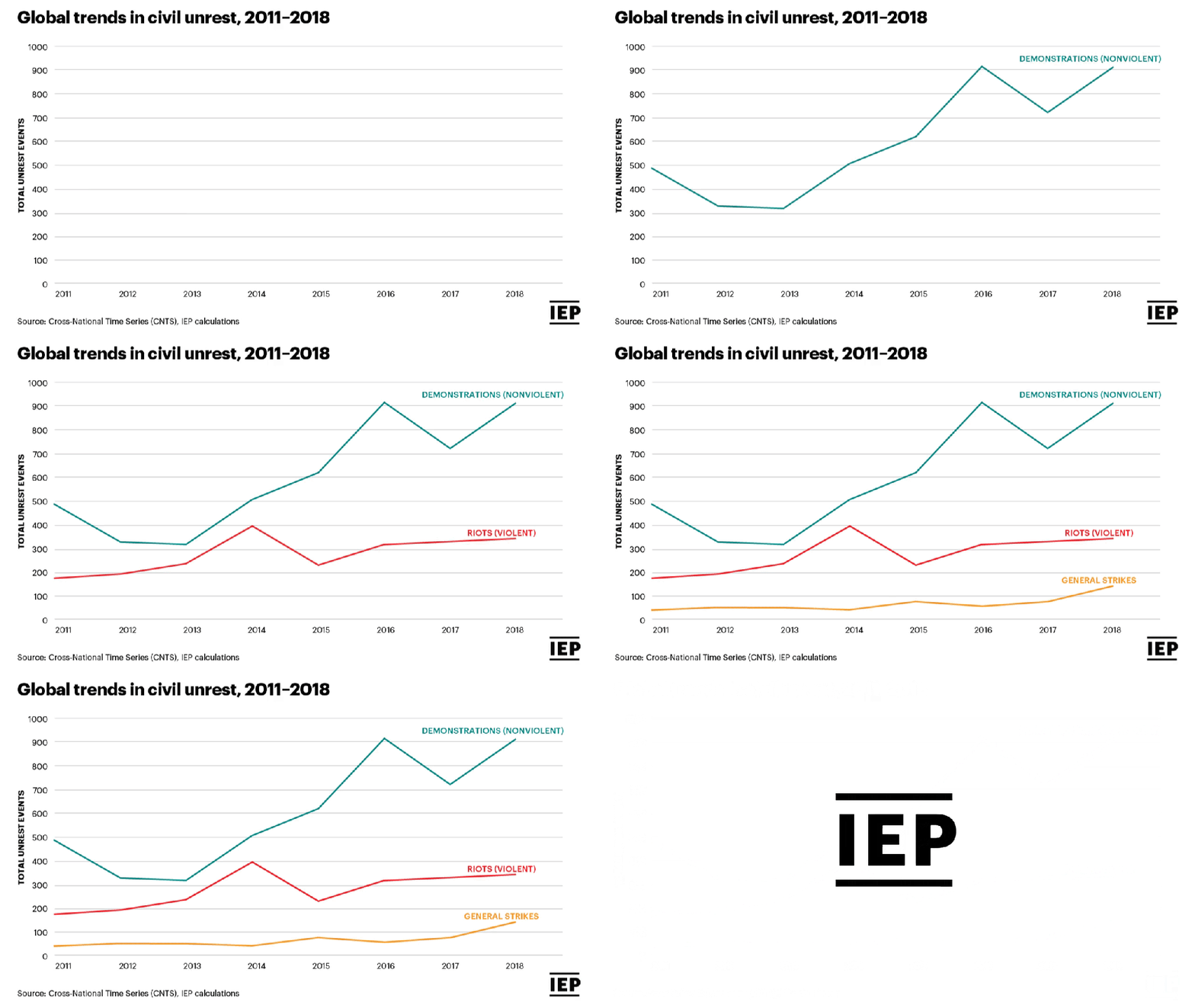
In advance of the November presidential election, analysts have started to take considerable interest in the potential for social disruption. Following theCapital Hill riots in 2021, Politico reports that “Approval for the January 6 attack has actually risen among Republicans in the past three years, from 21% to 30%, while those strongly disapproving dropped by almost 20 points.” Violence and extreme acts are increasing, even if only modestly in the United States but many wonder if the election could serve as a flashpoint for escalated social division and unrest.
Politico also noted that data from two different national surveys, they found that 24 percent of Republicans and 17 percent of Democrats believe that it is acceptable to threaten public officials; among Republicans who believe that Trump should have won the 2020 election, support for violence jumped 10 points. Although this data has been noted as contentious it is still concerning.
The BBC reported recently that “there have been more than 385 mass shootings across the US in 2024. Their figures include shootings that happen in homes and in public places. For each of the last four years there have been more than 600 mass shootings – almost two a day on average.” The analysis goes on to note that more recent data out of the US suggests that gun ownership grew significantly over the last few years. A study, published by the Annals of Internal Medicine in February, found that 7.5 million US adults became new gun owners between January 2019 and April 2021.
The United States remains a deeply polarized country with hard lines of division along political interests. This intense partisanship is intensified, not just in the United States, but globally and has led to deep social divisions. Adding to this, is the intensification of mis/dis-information campaigns that have moved from the fringes of society as conspiracy theories to Main Street politics.
It is also clear that not everyone have recovered financially, socially and mentally from the Global Pandemic which added and compressed a host of social stressors. These factors can without question add to the complexities of tension, anger and contempt for the current status for many Americans.
Adding to this is the intense ‘victim’ mentality that many voters carry into the polling booth, who respond to the lack of policy options and seemingly minimal critical thinking skills and marginal attention span that are carried through younger generations of voters creating a political vacuum cleaner for ill informed voters who are looking the path of least resistance to any party who puts forward a series of campaign soundbites that tick all the boxes and get all the likes.
The Risks of Polarization
A Nation Divided
The polarization of American society has reached a fever pitch in recent years. Deep-seated divisions over issues such as race, income inequality, and political ideology have created a climate of mistrust and animosity. This polarization has manifested in protests, demonstrations, and, in some cases, violence. There are some key considerations in terms of the implications:
Economic Strains
The economic fallout of the COVID-19 pandemic has exacerbated existing inequalities and increased economic hardship for many Americans. Job losses, income declines, and rising costs of living have created a sense of desperation and frustration. These economic strains have fueled protests and social unrest, particularly in communities that have historically faced systemic discrimination.
Political Gridlock
The inability of the U.S. government to address pressing domestic and international challenges has further contributed to the growing sense of discontent. Political gridlock, partisan bickering, and a lack of bipartisan cooperation have eroded public trust in institutions and undermined the government’s ability to effectively govern.
The Business Impact
The rising tide of social unrest poses significant risks to businesses operating in the United States. Disruptions to operations, property damage, and potential legal liabilities can have a severe impact on a company’s bottom line.Moreover, the negative publicity associated with social unrest can damage a company’s reputation and deter consumers.
Investor Concerns
Investors are increasingly concerned about the potential for social unrest to disrupt the stability of the U.S. economy. The uncertainty created by these events can lead to market volatility, reduced investment, and a decline in consumer confidence. As a result, businesses may find it more difficult to access capital and grow their operations.
The Road Ahead
Addressing the rising risks of social unrest in the United States will require a multifaceted approach. Policymakers must work to bridge the growing divide between Americans, promote economic opportunity, and strengthen democratic institutions. Businesses can also play a role by investing in their communities, promoting diversity and inclusion, and engaging with stakeholders to address social concerns.
 Help, is on the way
Leave a comment