Brazil’s Bullish Market Faces Skeptical Investors: An Examination of Risks Ahead
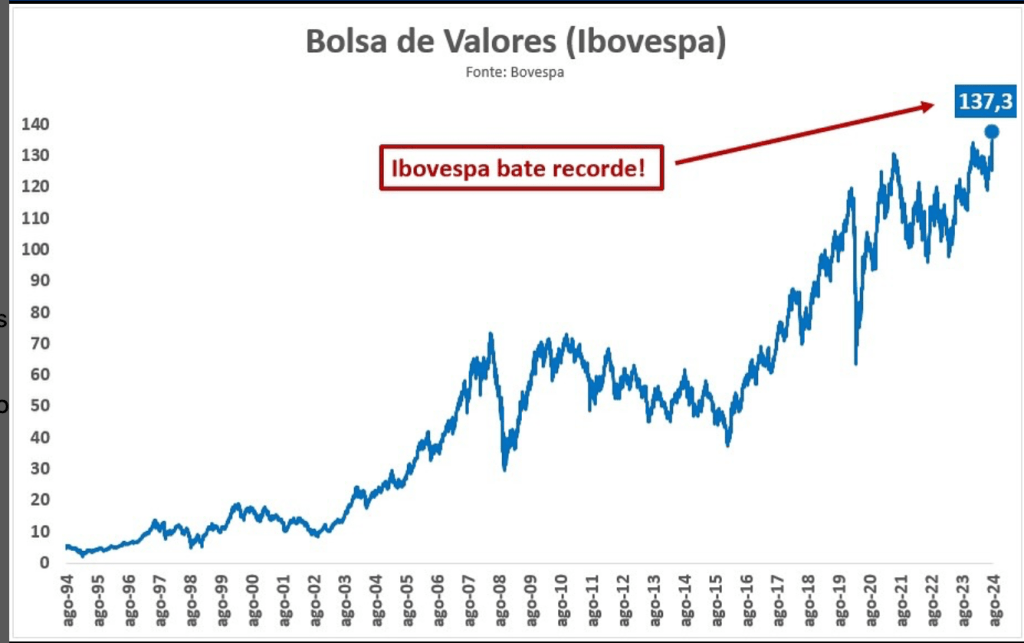
Geraldo Alckmin, Brazil’s Vice President and current Minister of Development, Industry, Trade, and Services, recently took to Instagram to celebrate a significant milestone: the Ibovespa, Brazil’s primary stock market index, reached a historic high of 137,300 points. For a nation with a turbulent economic history, this achievement could be seen as a vindication of recent policies and a signal of a prosperous future. Yet, behind the optimistic chart (below) lies a complex economic landscape fraught with risks that investors cannot afford to overlook.
A Celebration Amid Skepticism
Alckmin’s post was intended to project confidence, showcasing the resilience of Brazil’s market in the face of global uncertainties. The record-breaking figure indeed paints a picture of a thriving economy, attracting attention from both domestic and international investors. But the celebration was met with caution, if not outright skepticism, by seasoned market watchers who have learned to be wary of surface-level triumphs in Brazil’s financial markets.
A key reason for this caution is the pervasive investor wariness that has marked 2024. Despite the headline-grabbing performance of the Ibovespa, concerns over Brazil’s broader economic health remain. The country’s fiscal deficit, hovering dangerously close to 10% of GDP, looms large over any discussion of its economic future. This gap between government spending and revenue is a flashing warning sign for those looking to invest in Brazil, suggesting that the country’s financial underpinnings may not be as solid as the stock market suggests.
The Fiscal Deficit Dilemma
The crux of the issue lies in Brazil’s fiscal policy. A deficit of nearly 10% of GDP is unsustainable in the long term, and it raises several red flags for investors. First and foremost is the risk of inflation. Brazil has struggled with inflationary pressures for decades, and while recent years have seen some stabilization, a large fiscal deficit could reignite these forces. The Brazilian government has been forced to finance its spending through borrowing, which could lead to an increase in public debt—a scenario that would likely push up interest rates and dampen economic growth.
Moreover, the deficit also constrains the government’s ability to respond to economic shocks. With limited fiscal space, Brazil may find it difficult to implement counter-cyclical policies if the global economy takes a downturn or if domestic challenges, such as the recent political unrest and environmental crises, escalate. Investors are well aware of this limitation, which adds a layer of risk to their calculations when considering Brazilian assets.
The Political Environment: A Double-Edged Sword
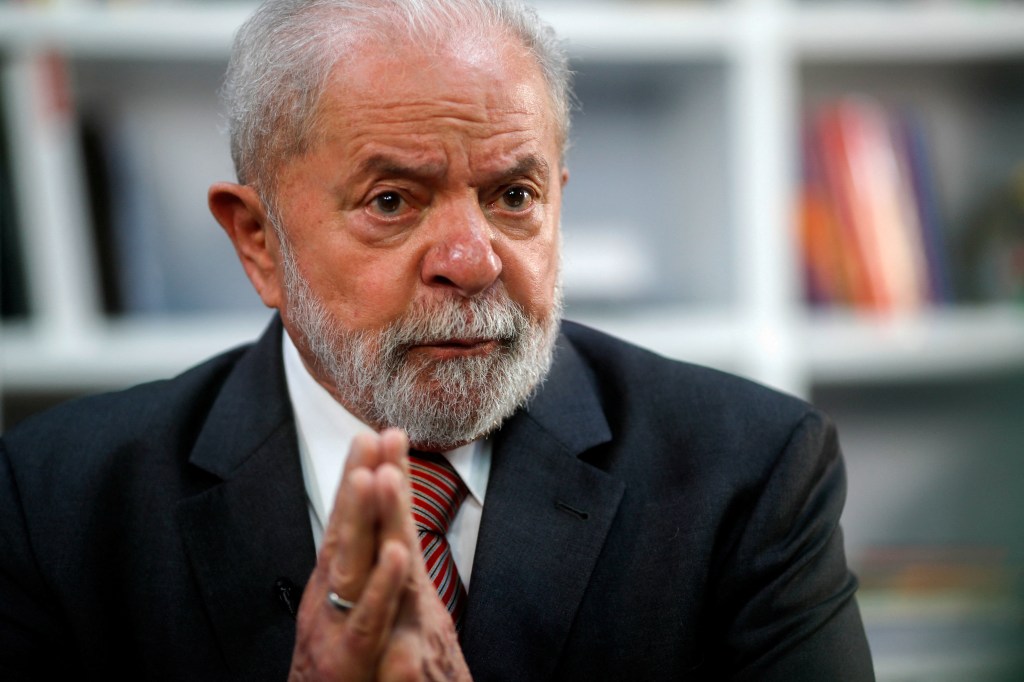
Brazil’s political landscape is another source of uncertainty. The country has experienced a series of political upheavals in recent years, with corruption scandals and contentious elections shaking the foundations of its democratic institutions. While President Luiz Inácio Lula da Silva, now in his third term, has promised to tackle the deficit and restore fiscal discipline, his government faces significant challenges in delivering on these promises.
Lula’s administration has been marked by a delicate balancing act between appeasing his traditional leftist base and addressing the concerns of the business community. His social spending programs, while popular, are a major contributor to the fiscal deficit. On the other hand, efforts to rein in spending and introduce fiscal reforms are likely to face stiff opposition from within his own party and from powerful interest groups.
The uncertainty surrounding Lula’s economic policies is compounded by the broader geopolitical environment. Brazil’s relationship with China, its largest trading partner, is critical to its economic future. However, tensions between the United States and China have put Brazil in a precarious position, forcing it to navigate a complex web of alliances and trade agreements. Any disruption in this relationship could have significant implications for Brazil’s export-driven economy, particularly in the agriculture and mining sectors.
Structural Challenges: Infrastructure and Inequality
Beyond the immediate fiscal and political risks, Brazil faces several structural challenges that could hinder its long-term economic prospects. One of the most pressing is the country’s inadequate infrastructure. Despite being the largest economy in Latin America, Brazil lags behind many of its peers in terms of infrastructure development. Poor transportation networks, underdeveloped ports, and unreliable energy supplies are significant barriers to economic growth and foreign investment.
Efforts to address these issues have been hampered by bureaucratic inefficiencies, corruption, and a lack of long-term planning. While the government has announced ambitious infrastructure projects, including partnerships with the private sector, progress has been slow. Investors are understandably cautious about committing capital to a country where logistical bottlenecks and regulatory hurdles can erode profitability.
Inequality is another long-standing challenge that poses a risk to Brazil’s economic stability. Despite recent progress in reducing poverty, Brazil remains one of the most unequal societies in the world. High levels of income inequality can lead to social unrest, which in turn can destabilize the political environment and deter investment. Moreover, inequality also limits the potential for domestic demand growth, as a large portion of the population lacks the purchasing power to drive consumption-led expansion.
The Environmental Quandary
Brazil’s environmental challenges, particularly deforestation in the Amazon, add another layer of complexity to its economic outlook. The Amazon rainforest is not only a critical global resource in the fight against climate change, but it is also central to Brazil’s own environmental sustainability. However, deforestation rates have surged in recent years, driven by illegal logging, mining, and agricultural expansion.
The environmental degradation of the Amazon has not gone unnoticed by the international community, and Brazil has faced increasing pressure from foreign governments and NGOs to take more decisive action. Failure to address these concerns could lead to economic sanctions or the loss of preferential trade agreements, further complicating the country’s economic recovery.
Moreover, the destruction of the Amazon has direct economic consequences for Brazil. The rainforest plays a vital role in regulating the regional climate, and its loss could lead to more extreme weather events, such as droughts and floods, which would have devastating effects on Brazil’s agricultural sector. Given that agriculture is one of the pillars of the Brazilian economy, any disruption in this sector would have far-reaching implications for the country’s overall economic health.
The Road Ahead: Navigating Uncertainty
While the Ibovespa’s record high is a noteworthy achievement, it should not overshadow the significant risks facing Brazil’s economy. The fiscal deficit, political uncertainty, structural challenges, and environmental concerns all combine to create a volatile investment environment. Investors would do well to approach Brazil with caution, recognizing that the country’s economic prospects are intertwined with its ability to address these underlying issues.
The year ahead will likely test the resilience of Brazil’s economy and the resolve of its policymakers. For investors, the challenge will be to navigate the risks while identifying opportunities in a market that, despite its challenges, still holds considerable potential. Whether Brazil can capitalize on this potential will depend on the government’s ability to implement meaningful reforms and stabilize the economic landscape—a task that will require both political will and strategic foresight.
 Help, is on the way
Leave a comment